
Brand Voice Engine
How I built an AI tool that identifies a brand’s voice and creates a brand guide from scratch.
My Role
Product Definition | Prompt & Schema Design AI-Assisted Build | Evaluation
Tools Used
Claude Code | GitHub | Vercel | Neon | Drizzle
React 19 | ChatGPT | Perplexity
The Problem
Every brand has a voice.
Not all have the resources to capture it.
For many small businesses, documenting their brand voice is one more thing for the “back-burner” list. Not because they don’t care, but because they often don’t have the time, resources, or expertise.
Among other things, this hampers their ability to effectively use AI to automate marketing comms. With no brand voice documentation to serve as a source of truth, messaging can get messy.
The Approach
Start with what exists.
Stay true without invention.
The idea was to flip the usual process. Timbre doesn't start from adjectives. It reads everything the brand already has in the wild (website, emails, social posts, print) and builds the guide from that.
Every observation in the finished guide ties back to the copy it came from. Timbre brings the underlying personality and tone of voice to the surface without inventing something the brand isn’t.
How It Works
From a pile of content to a brand voice in three steps.
Step 1: Upload Sources
Upload files or whole folders, paste copy directly, or add a link. Each kind of file has its own reader, and every reader leaves out anything that isn’t the brand’s own voice, like navigation, cookie banners, and other people’s comments on social posts.
Brands can upload any type of file. Timbre omits non-brand content like microcopy, legalese, and user comments on social posts.
Step 2: Build the Guide
Timbre reads the library eight times, each pass looking for one element of the guide, and builds the guide in a couple of minutes. Every entry, from personality traits to writing principles, sits on the real copy it came from.
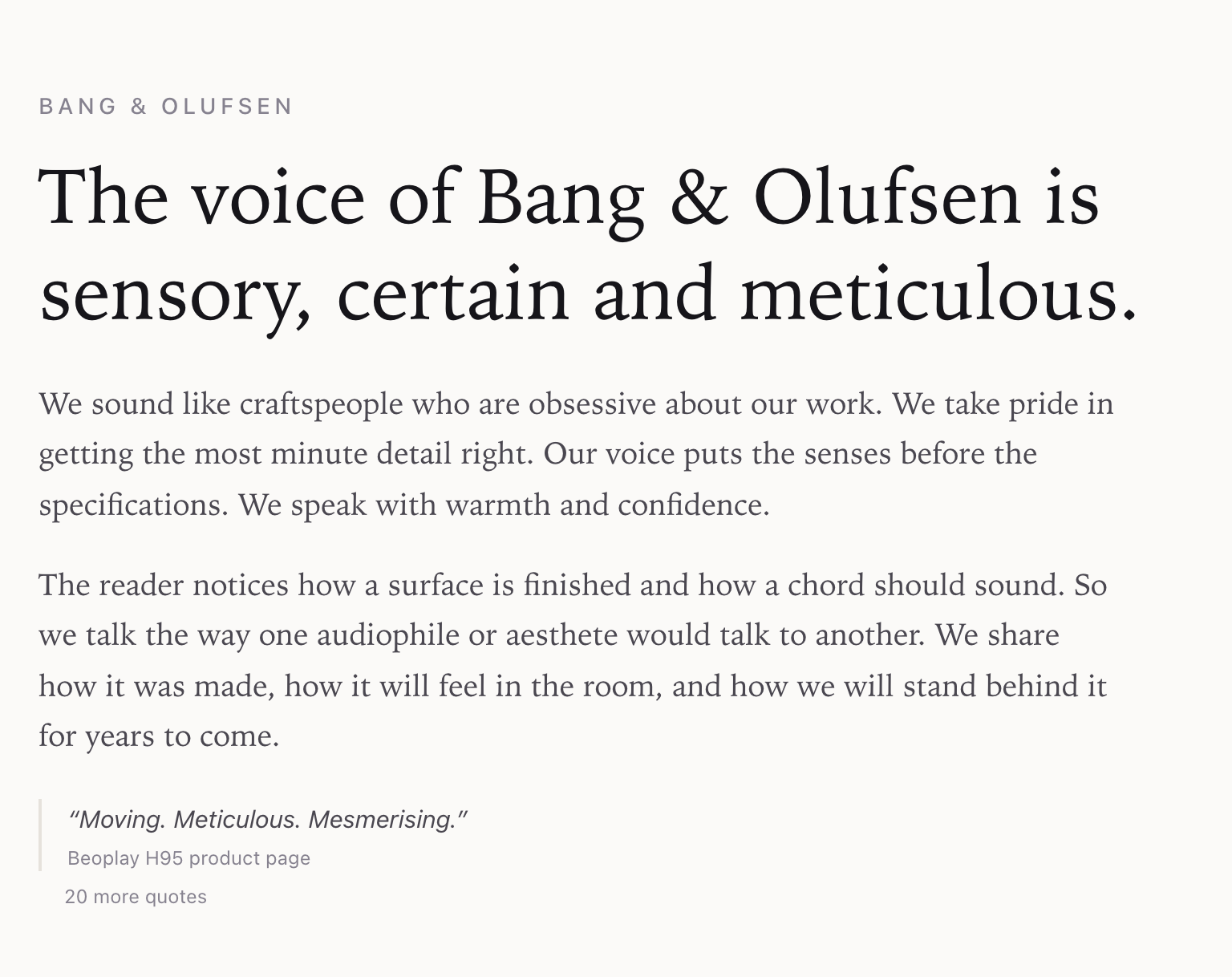
The opening of the Bang & Olufsen guide, with the brand’s own reference line underneath.
Step 3: Refine the Guide
Brands have freedom to edit inline or leave comments. Timbre makes updates and revises based on your feedback. But ask it to “make warm and fluffy” when the sources say otherwise and Timbre will push back and tell you why.
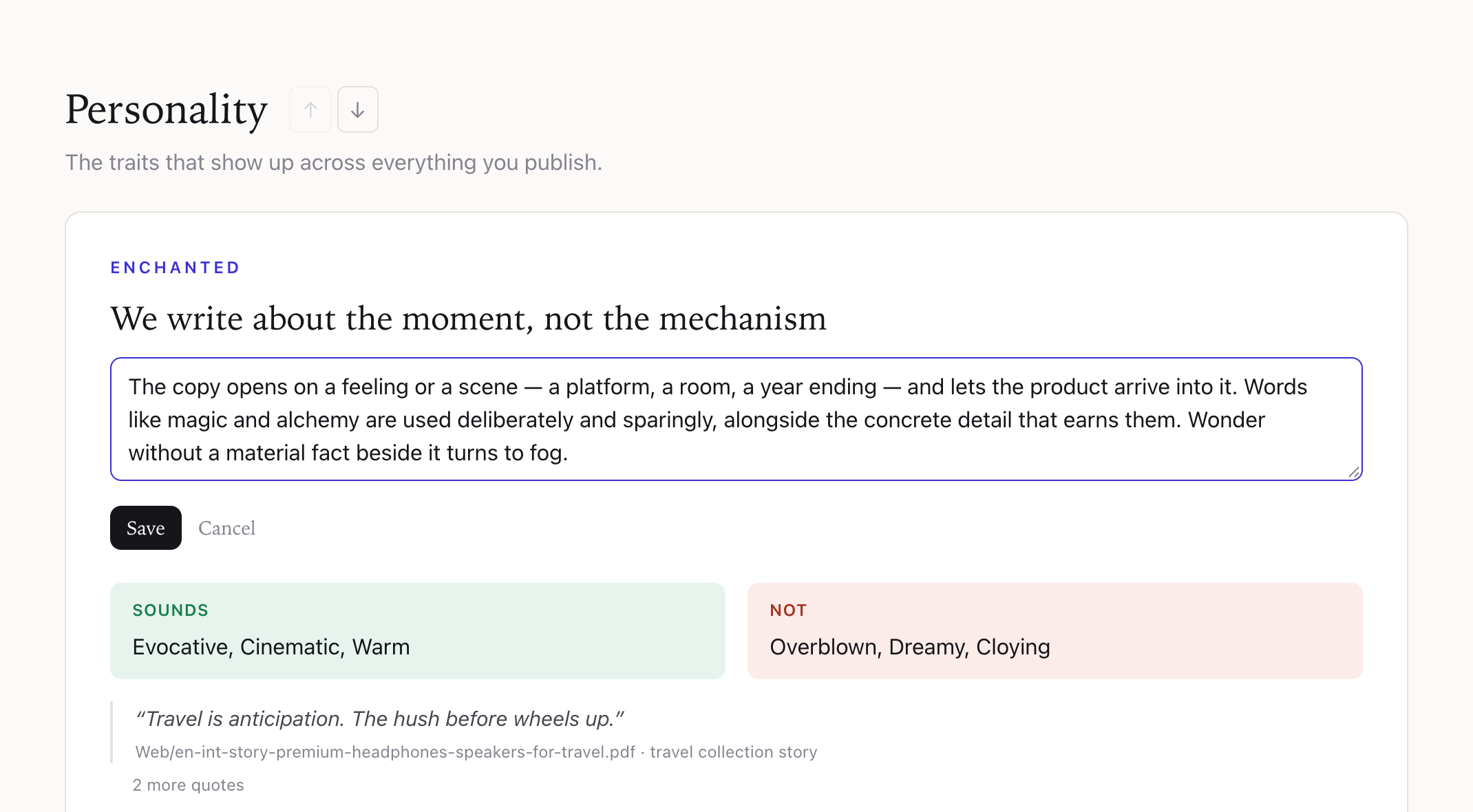
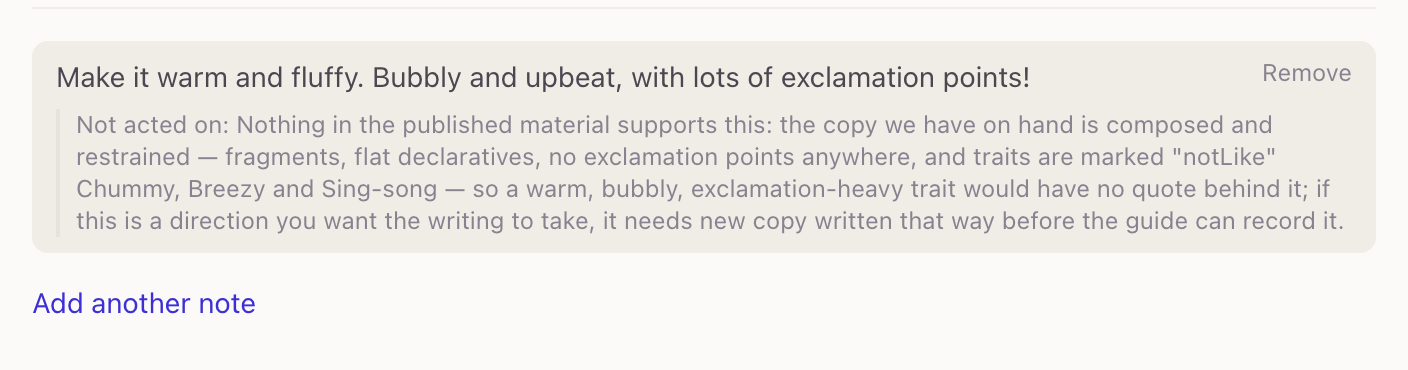
Users can edit inline or leave an update request. When the copy doesn’t support a request, Timbre pushes back and explains why.
Behind the Build
Creating Timbre.
From teaching to testing.
I showed Timbre what a good guide is.
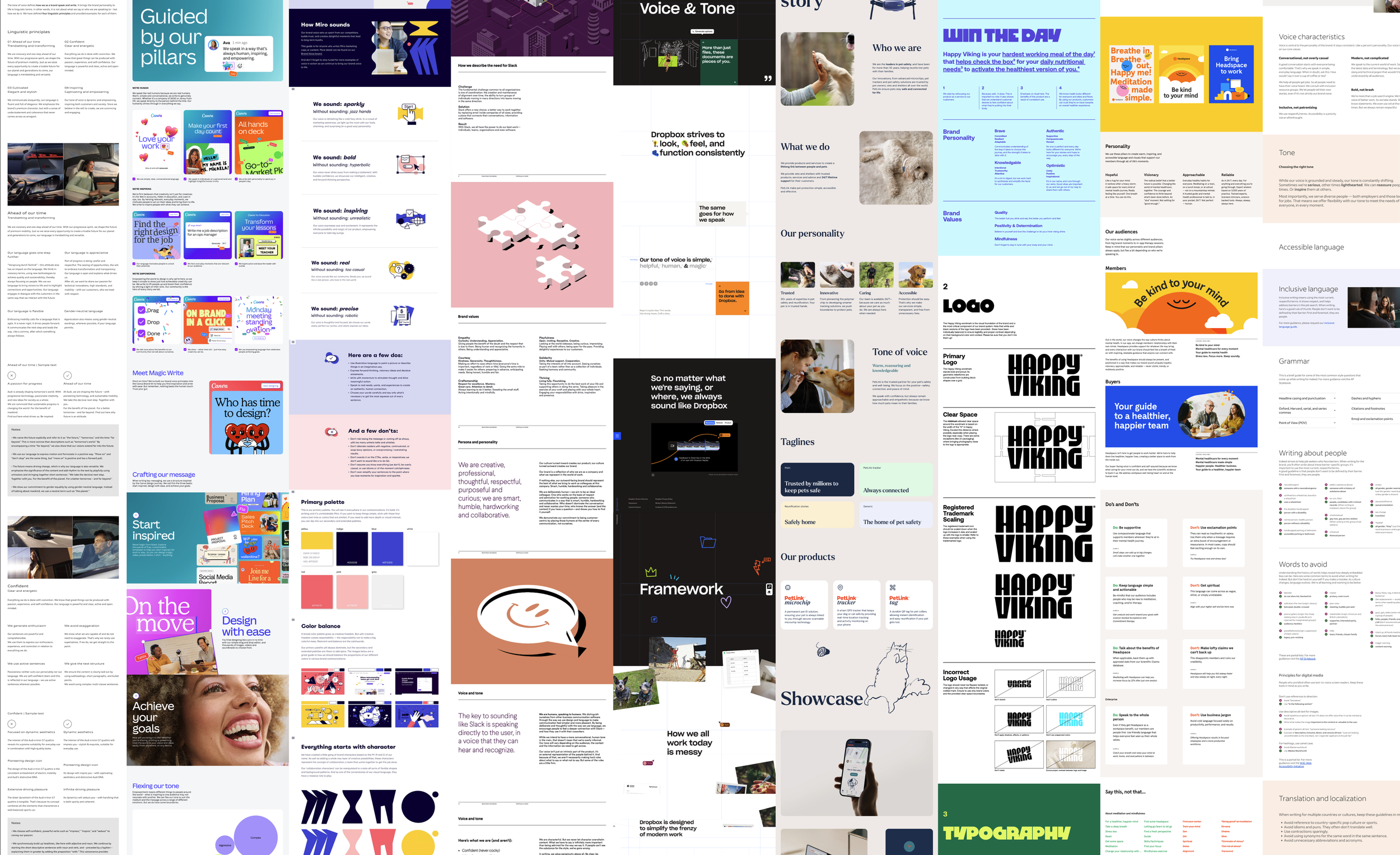
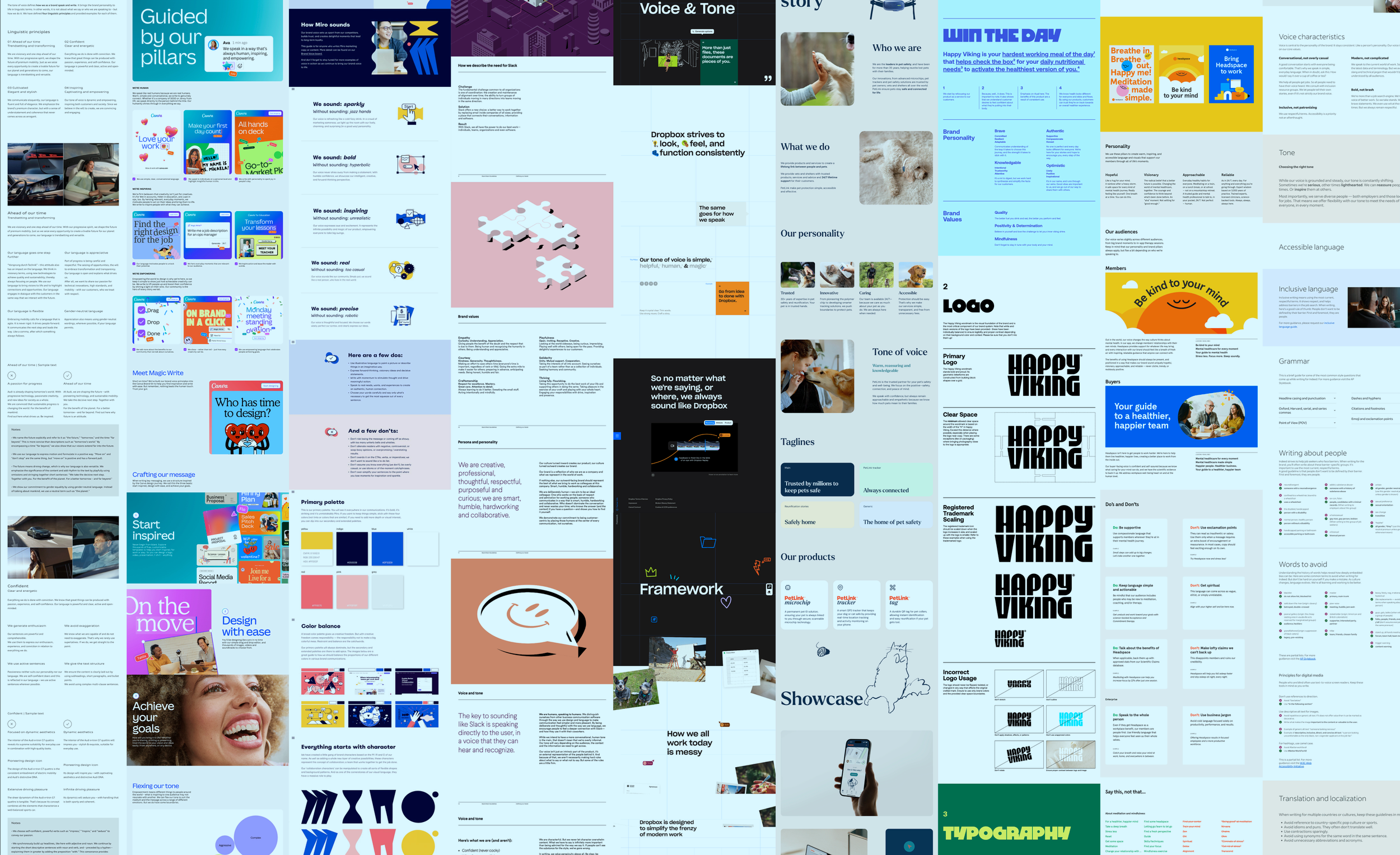
I collected over a dozen published brand guides from different industries, focusing on how they were built. That study became the template every Timbre guide follows. Next, I added live marketing content from several of these brands, which helped Timbre correlate a good guide with good source material.

Published guides from dozens of industries shaped Timbre’s template.
I tested Timbre on brands it had never seen.
I then chose a handful of brands Timbre wasn’t familiar with (Headspace, for example) and gathered copy from their websites, emails, in-app messaging, and social posts. Timbre built a guide from that copy alone, without ever seeing the brand guides. No cheating.
In a separate workstream, I compared the guide Timbre built with the brand’s real guide—serving as an answer key. I noted where it got it right and where it fell short, then used that feedback to improve the next version. The more I tested and evaluated, the more accurate Timbre became.
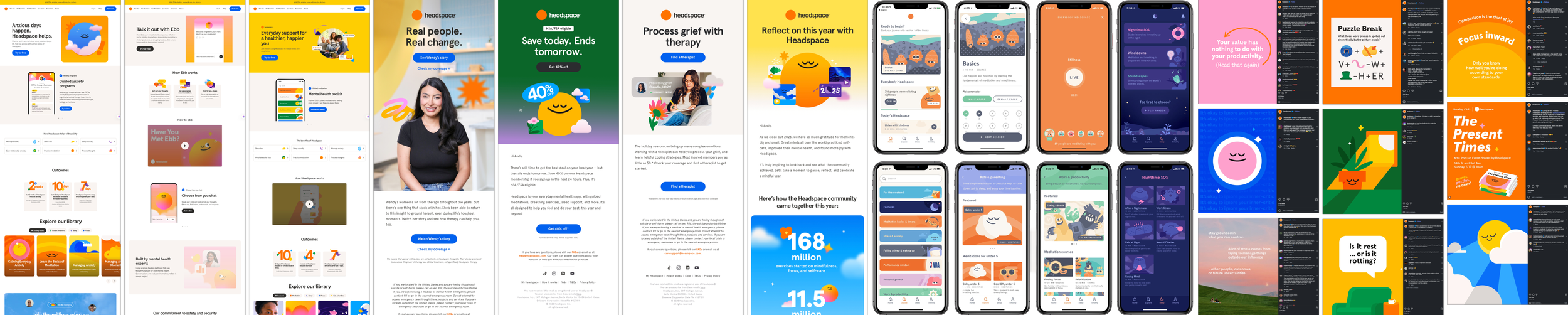
Headspace’s source material used for testing. The resulting guide was compared to Headspace’s published guide in a separate workstream.
The Result
The end result is a solid foundation for any business that wants to capture its brand voice, in the time it takes to grab a coffee. For a small business, that means a real source of truth: a guide they can hand to a new hire, a freelancer, or an AI tool, and get writing back that sounds like them.