
Progressive CRM
How I helped Progressive connect with, and keep, their customers.
My Role
Creative Direction | Strategy
Copywriting | Flo Fan
The Problem
Bills don't build loyalty.
Progressive's renewal emails weren't pulling the opens or clicks the team wanted. So they called HackerAgency.
I partnered with our strategy and account teams to audit every renewal touch, from the 28-day quote to the final bill. We found a program built to process payments, not keep customers. Headlines were functional. Savings, the number one reason people switch insurers, were buried. Each piece tried to thank, sell and collect at once. And the stream gave up one day after a lapse.
The Approach
Position renewal as a way to rekindle the relationship.
Insurance is bought by everyone and felt by almost no one. Customers told us the less they hear from their insurer, the better. Meanwhile, the competition never stops fishing.
So we reframed renewal as a relationship, one renewed in six-month increments.
The Work
Same goal.
New voice.
With our strategy in place, I led the creative team to develop three potential directions.
Valuetown made saving a habit, not a one-time price. "Stay put. Save happy."
Competitive Love flipped the competition's bait. They try to buy your love. We show it.
Super Benefits surfaced the perks customers never knew they had. "Get more extras than you can shake a stick shift at."
All three landed with the client. In the end, we tested all three.
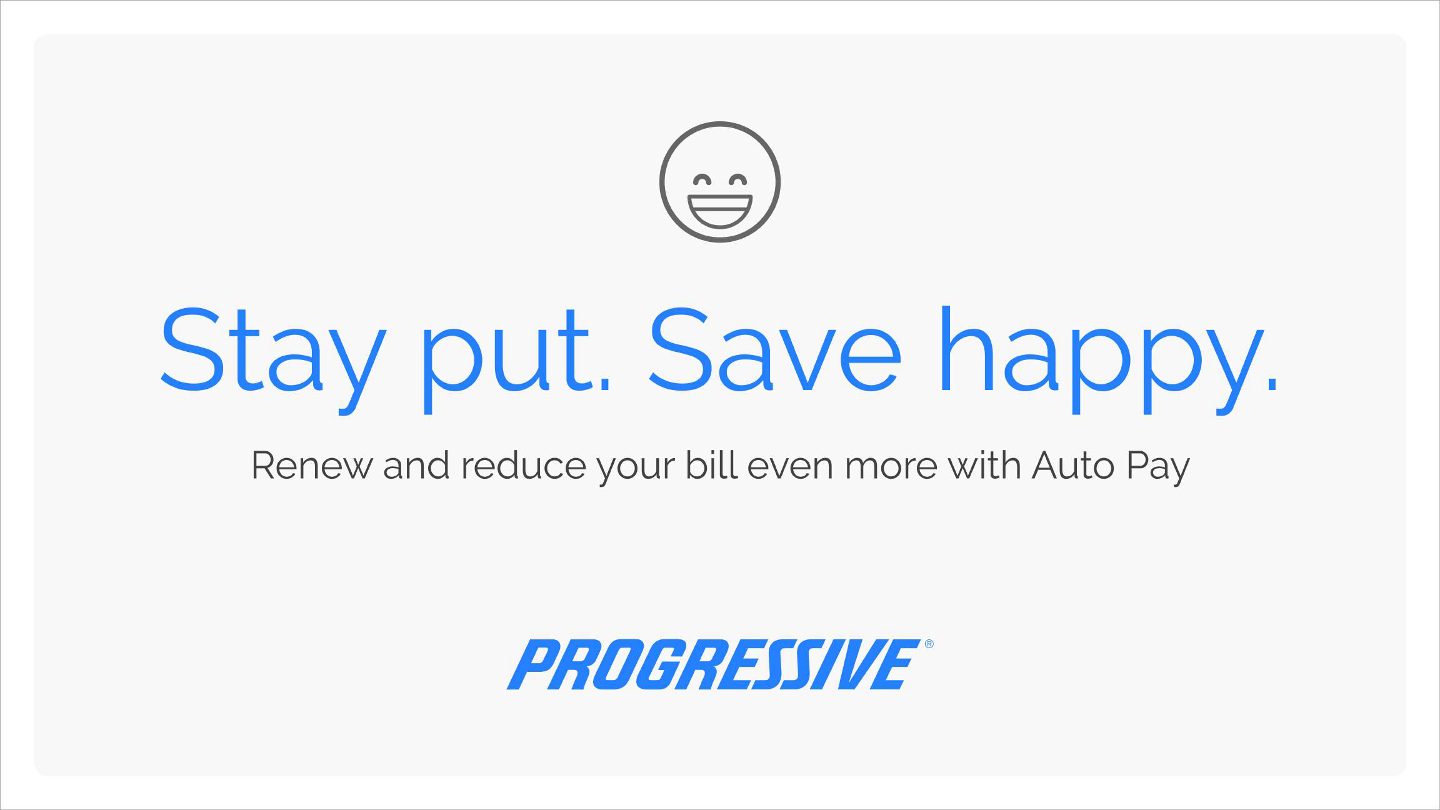
Valuetown Concept Adlob

Competitive Love Concept Adlob

Super Benefits Concept Adlob
The Work
From a pile of content to a brand voice in three steps.
Step 1: Upload Sources
Upload files or whole folders, paste copy directly, or add a link. Each kind of file has its own reader, and every reader leaves out anything that isn’t the brand’s own voice, like navigation, cookie banners, and other people’s comments on social posts.
Brands can upload any type of file. Timbre omits non-brand content like microcopy, legalese, and user comments on social posts.
Step 2: Build the Guide
Timbre reads the library eight times, each pass looking for one element of the guide, and builds the guide in a couple of minutes. Every entry, from personality traits to writing principles, sits on the real copy it came from.
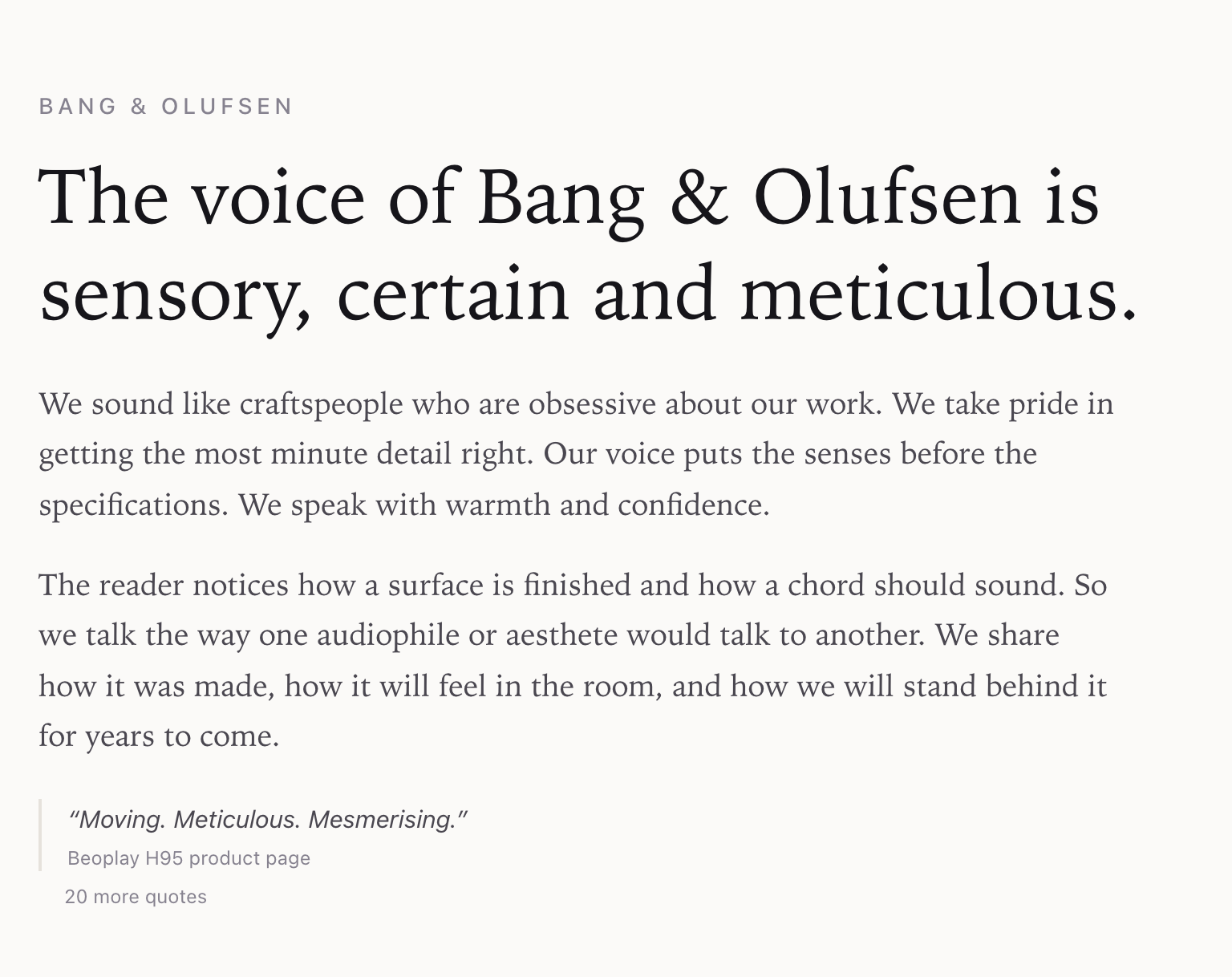
The opening of the Bang & Olufsen guide, with the brand’s own reference line underneath.
Step 3: Refine the Guide
Brands have freedom to edit inline or leave comments. Timbre makes updates and revises based on your feedback. But ask it to “make warm and fluffy” when the sources say otherwise and Timbre will push back and tell you why.
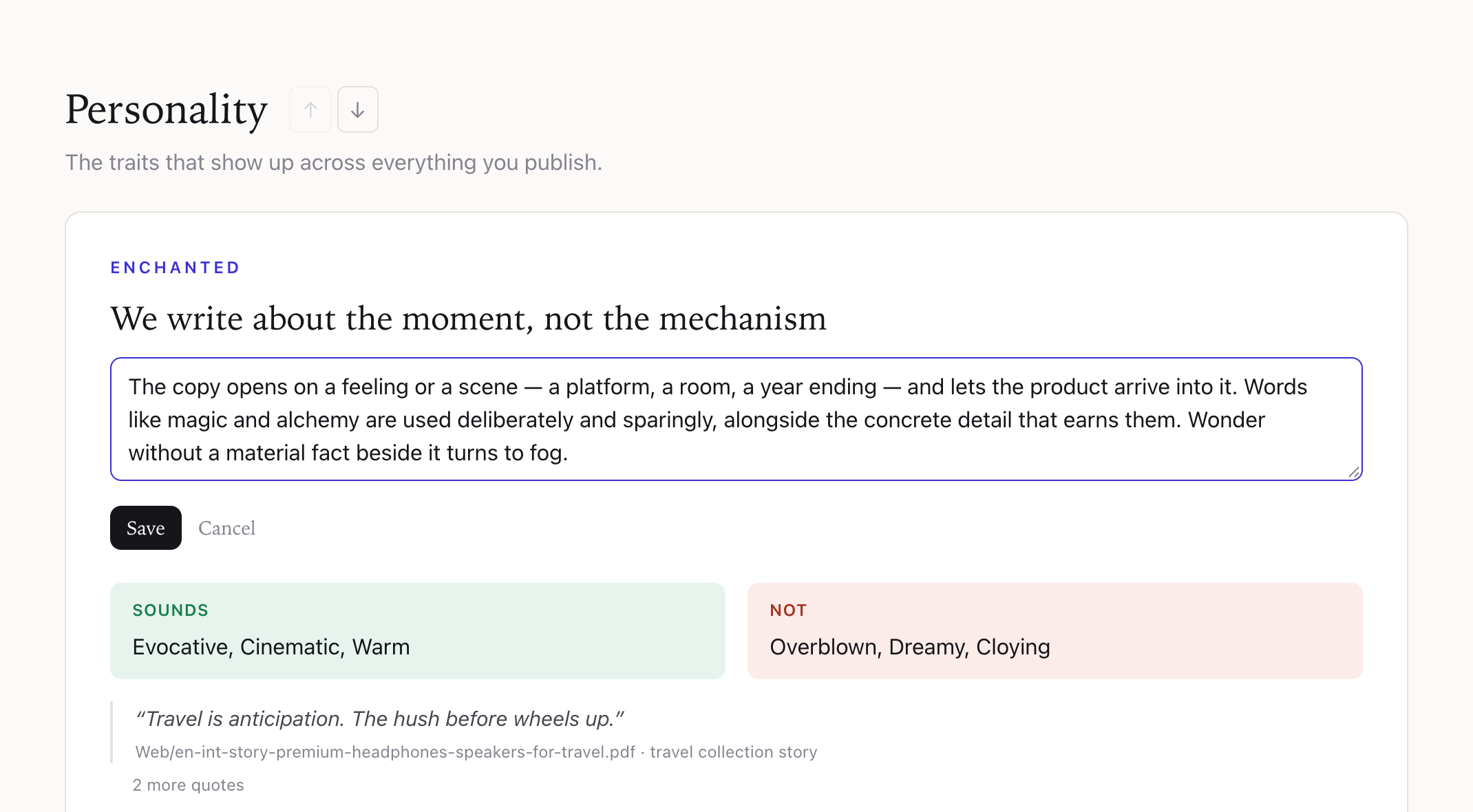
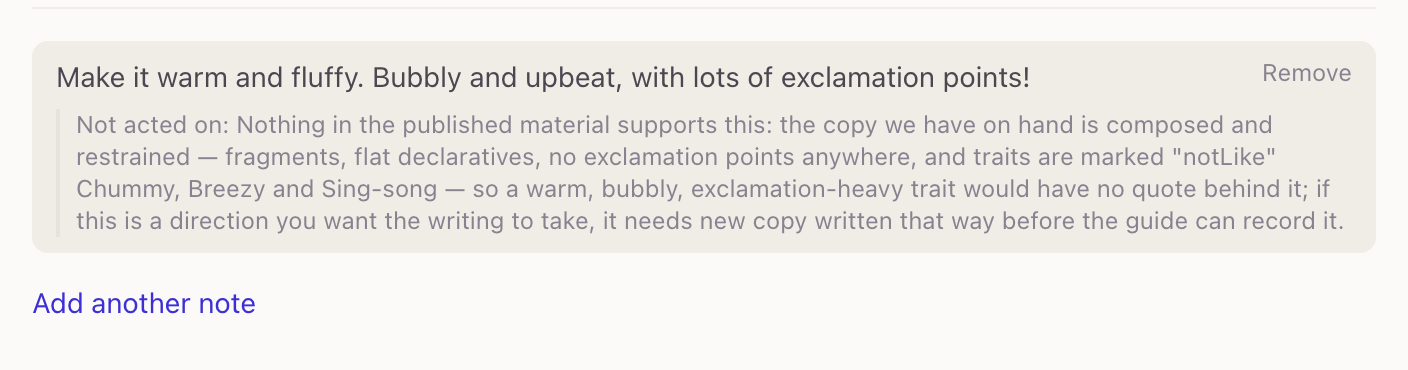
Users can edit inline or leave an update request. When the copy doesn’t support a request, Timbre pushes back and explains why.
Behind the Build
Creating Timbre.
From teaching to testing.
I showed Timbre what a good guide is.
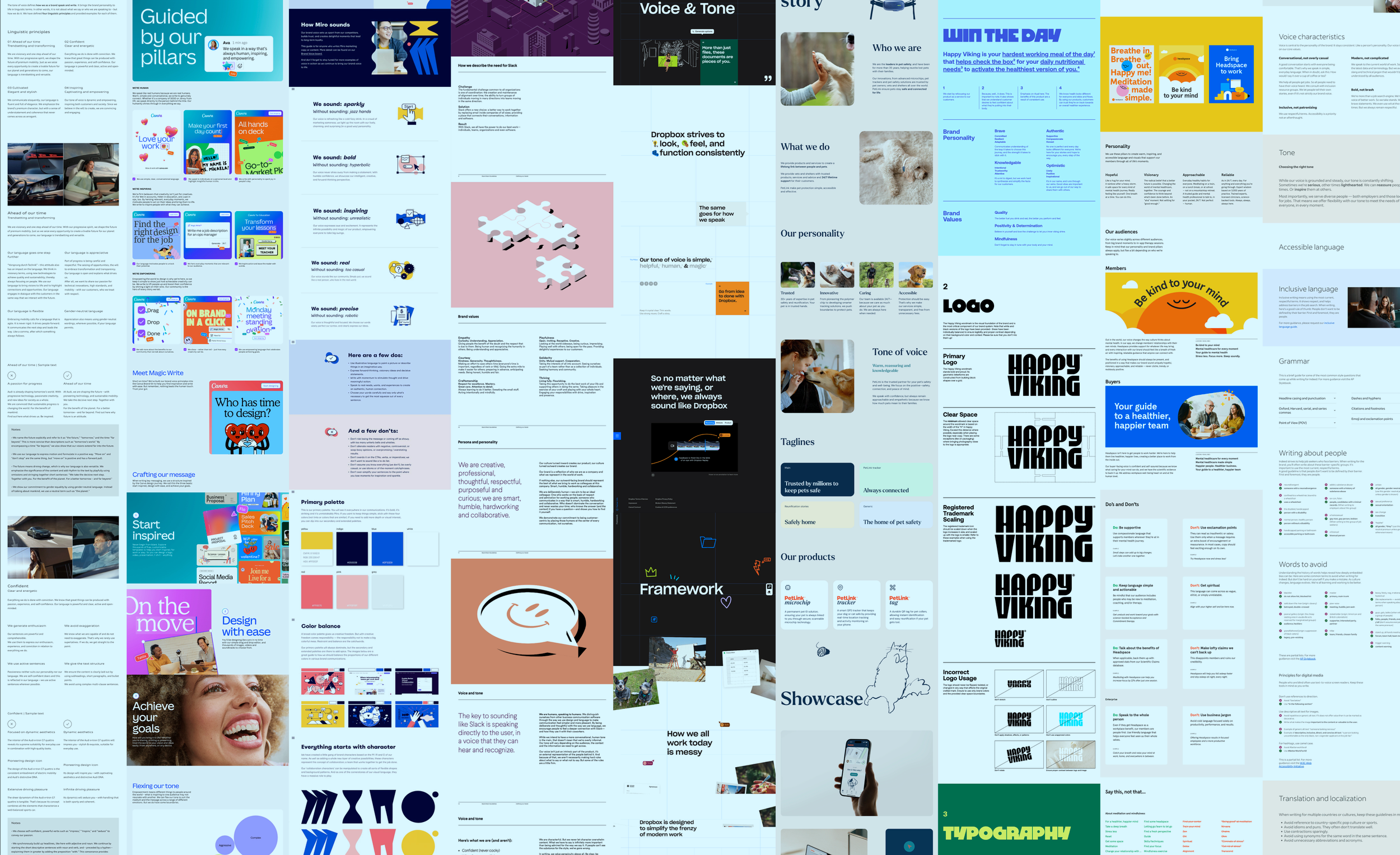
I collected over a dozen published brand guides from different industries, focusing on how they were built. That study became the template every Timbre guide follows. Next, I added live marketing content from several of these brands, which helped Timbre correlate a good guide with good source material.

Published guides from dozens of industries shaped Timbre’s template.
I tested Timbre on brands it had never seen.
I then chose a handful of brands Timbre wasn’t familiar with (Headspace, for example) and gathered copy from their websites, emails, in-app messaging, and social posts. Timbre built a guide from that copy alone, without ever seeing the brand guides. No cheating.
In a separate workstream, I compared the guide Timbre built with the brand’s real guide—serving as an answer key. I noted where it got it right and where it fell short, then used that feedback to improve the next version. The more I tested and evaluated, the more accurate Timbre became.

Headspace’s source material used for testing. The resulting guide was compared to Headspace’s published guide in a separate workstream.
The Result
The end result is a solid foundation for any business that wants to capture its brand voice. For a small business, that means a real source of truth: a guide they can hand to a new hire, a freelancer, or an AI tool and get writing back that sounds like them.